
Understanding the Differences Between Suction, Robotic, Wireless Robotic, and JetVac Pool Cleaners
Choosing the right pool cleaner can make a big difference in how easy it is to keep your pool sparkling clean. With so many options available—including suction cleaners, robotic cleaners, wireless robotic cleaners, and JetVac cleaners—it’s essential to understand the strengths and weaknesses of each to find the best fit for your pool. Here’s a breakdown of the differences between these popular pool cleaner types.
- Suction Cleaners
Suction pool cleaners are one of the most common and cost-effective types of automatic pool cleaners. They connect to your pool’s filtration system and rely on suction generated by your pool pump to vacuum up debris.
- How It Works: Suction cleaners attach to the skimmer or a dedicated suction line in your pool. They move around randomly, sucking up debris and dirt, which is then deposited into your pool’s filtration system.
- Pros:
- Affordable: Suction cleaners are generally the least expensive type of automatic pool cleaner.
- Simple to Install: They connect directly to the pool’s filtration system without any need for additional power or equipment.
- Good for Small Debris: Ideal for picking up smaller debris like dirt, sand, and small leaves.
- Cons:
- Strains the Filtration System: Since they rely on your pool’s pump and filter, they can add extra wear and tear on these components.
- Random Movement: They often move in a random pattern, meaning they may take longer to clean the entire pool.
- Not Ideal for Large Debris: Suction cleaners can struggle to handle larger debris, like leaves or twigs, and may clog more easily.
Best For: Homeowners looking for a budget-friendly cleaning option for small to medium debris in pools with basic cleaning needs.
- Robotic Pool Cleaners
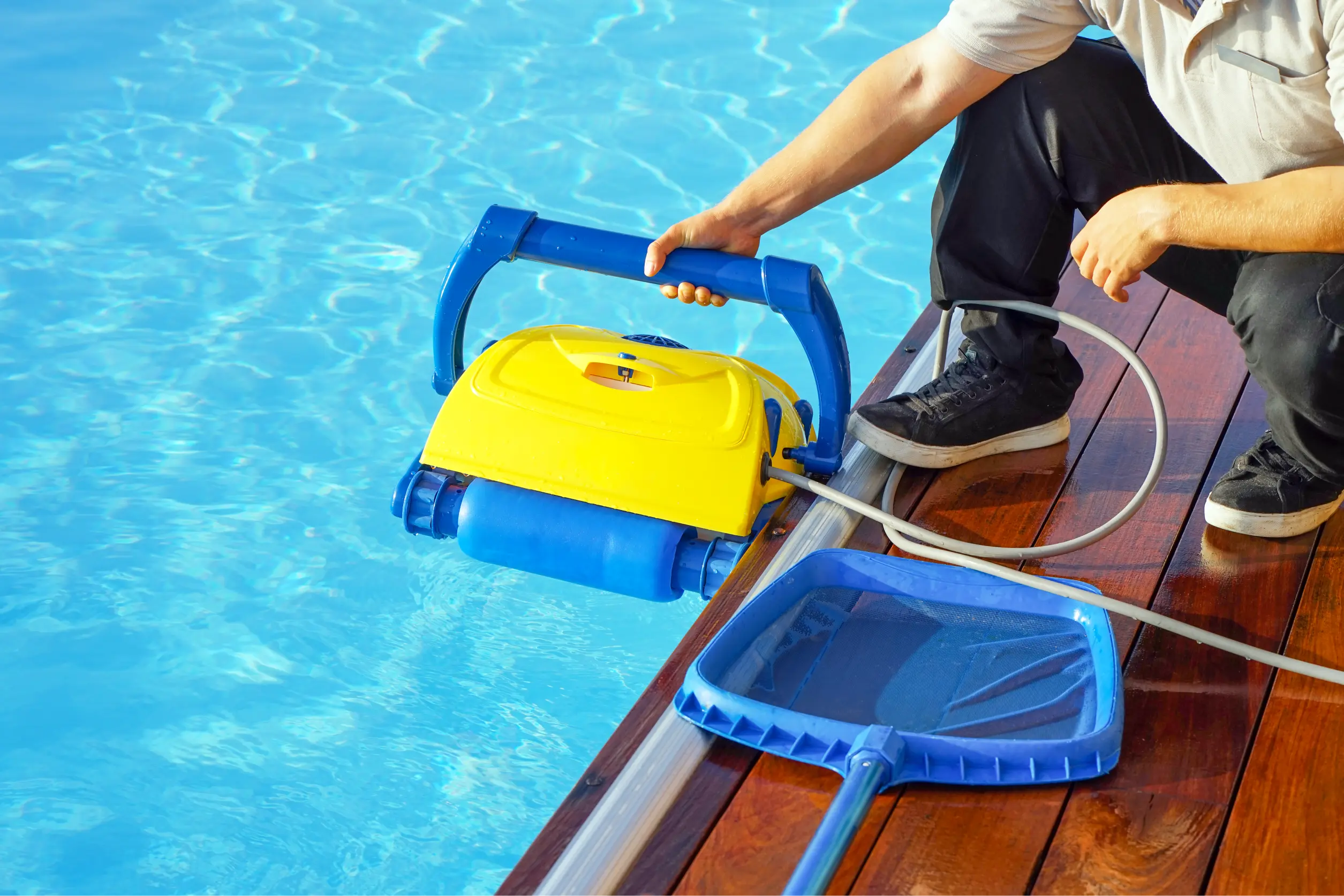
Robotic pool cleaners are highly efficient, self-contained units that don’t rely on the pool’s filtration system. They are powered by electricity and come equipped with their own motors, filtration systems, and advanced navigation technology.
- How It Works: Robotic cleaners plug into an external power source (usually a wall outlet) and move independently around the pool, scrubbing walls, floors, and the waterline. They capture debris in an onboard filter, which is easy to clean and maintain.
- Pros:
- Thorough Cleaning: Robotic cleaners scrub the pool’s surfaces, providing a more thorough clean than suction cleaners. They handle both fine particles and larger debris.
- Energy Efficient: Despite using electricity, they are often more energy-efficient than suction cleaners because they don’t rely on the pool pump.
- Independent Operation: Since they don’t connect to the pool’s filtration system, they reduce wear on the pump and filter.
- Programmable Features: Many robotic cleaners have programmable settings, allowing for more efficient and targeted cleaning.
- Cons:
- Higher Cost: Robotic cleaners are more expensive upfront than suction cleaners.
- Heavier: Some models can be bulky and harder to lift out of the pool.
- Requires a Power Source: The need for a power cord can limit movement, and tangled cords can be a hassle.
Best For: Pool owners who want a hands-free, high-performance cleaner capable of scrubbing floors, walls, and the waterline, and who are willing to invest in a more advanced system.
- Wireless Robotic Pool Cleaners
Wireless robotic pool cleaners are a newer, more advanced version of traditional robotic cleaners, offering the same efficient cleaning performance without the hassle of a power cord.
- How It Works: Wireless robotic cleaners run on rechargeable batteries and move independently around the pool, collecting debris and scrubbing surfaces like traditional robotic cleaners. They don’t need to be plugged into an outlet, making them more convenient.
- Pros:
- Cord-Free Convenience: Without the power cord, wireless robotic cleaners move freely around the pool, eliminating the risk of tangling and providing full mobility.
- Thorough Cleaning: Like standard robotic cleaners, they provide excellent cleaning coverage, scrubbing walls, floors, and the waterline.
- Energy Efficient: They don’t draw from the pool’s energy system, and the battery life is generally sufficient for cleaning cycles.
- Cons:
- Battery Life Limitations: These cleaners have a limited run time, usually from 1-3 hours, depending on the model. Larger pools may need multiple cleaning sessions between charges.
- Higher Cost: They are generally more expensive than standard robotic cleaners.
- Battery Maintenance: Batteries will eventually wear out and need to be replaced, adding to long-term maintenance costs.
Best For: Pool owners who want the convenience of a cordless cleaner with all the features of a robotic cleaner and are willing to pay a premium for freedom of movement and ease of use.
- JetVac Pool Cleaners
JetVac cleaners are pressure-side cleaners that use water pressure from a booster pump to move around the pool. Unlike suction cleaners, JetVac cleaners push debris into an onboard bag instead of sending it to the pool’s filter.
- How It Works: JetVac cleaners are connected to a dedicated pressure line and powered by a booster pump. Water pressure drives the cleaner around the pool, where it picks up debris and stores it in a filter bag, leaving the pool filter free of debris.
- Pros:
- Powerful Cleaning: JetVac cleaners are ideal for larger debris like leaves, twigs, and acorns, which can clog suction cleaners.
- Doesn’t Strain Pool Filter: The debris is collected in an onboard bag, reducing the load on the pool’s filtration system.
- Works Well in Larger Pools: The booster pump provides enough power to clean larger pools effectively.
- Cons:
- Requires a Booster Pump: If your pool doesn’t already have a booster pump, you’ll need to install one, adding to the upfront cost.
- More Expensive to Operate: The booster pump increases energy consumption, making JetVac cleaners more costly to run than robotic or suction cleaners.
- Maintenance: The onboard bag needs to be emptied regularly, and the cleaner requires a bit more upkeep.
Best For: Pool owners dealing with larger debris or who have pools with heavy leaf litter and want a robust cleaning system that won’t burden the pool’s filtration system.
Which Pool Cleaner Is Right for You?
- Suction Cleaners: Best for budget-conscious homeowners with smaller pools or minimal debris. They’re affordable but require more work from the pool’s filtration system.
- Robotic Cleaners: Ideal for pool owners who want high-performance cleaning with minimal effort. Robotic cleaners offer superior cleaning capabilities but come with a higher upfront cost.
- Wireless Robotic Cleaners: Perfect for those who want the flexibility of a robotic cleaner without the hassle of cords. These offer convenience and freedom of movement but require battery maintenance.
- JetVac Cleaners: The go-to option for pools with heavy debris or large backyards with lots of foliage. These cleaners are great for big jobs and don’t strain the pool’s filter, though they need a booster pump and are more expensive to operate.
Conclusion
The right pool cleaner for you depends on the type of debris your pool collects, your budget, and how much maintenance you’re willing to do. Suction cleaners are budget-friendly and simple, while robotic cleaners offer advanced cleaning with less effort. Wireless robotic cleaners give you freedom from cords, and JetVac cleaners are ideal for pools with larger debris. Each option has its strengths, so choosing the right one depends on your specific pool cleaning needs!